Showing posts with label cochlear implant. Show all posts

Monday, March 02, 2015

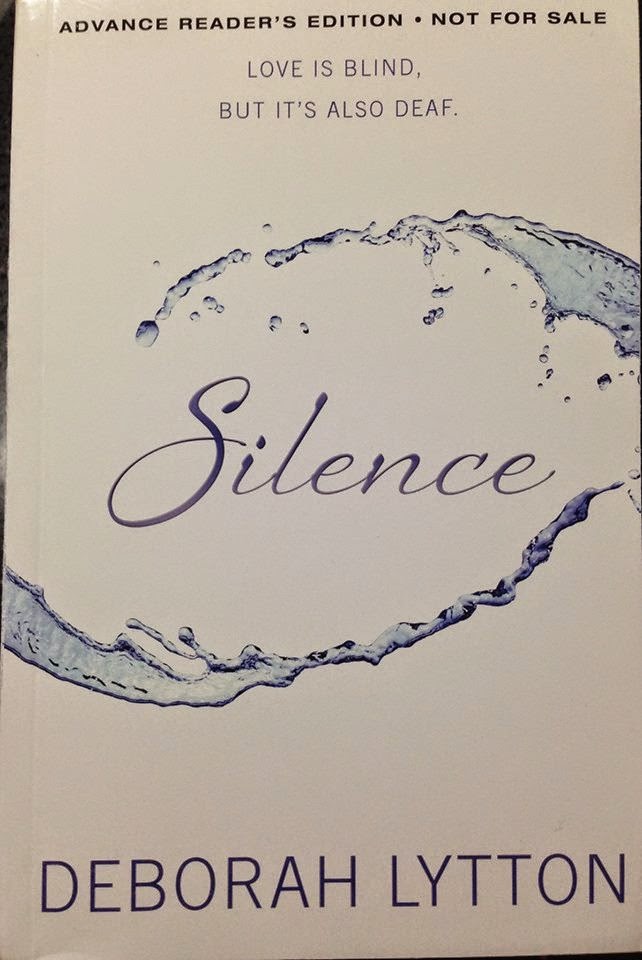
Interview with Deborah Lytton, author of Silence (2015)

Silence by Deborah Lytton
Hardcover: 320 pages
Publisher: Shadow Mountain (March 3, 2015)
Language: English
ISBN-10: 1609079450
ISBN-13: 978-1609079451


I’m going to start this a bit unconventionally because I’ve been in that kind of place this week. It all began when a new member of the book club that I’m in made the statement, “it must be horrifying to not be able to hear.” This was completely off topic and not at all related to deaf characters. In fact, this was part of a discussion about horror fiction.  I’m afraid that my reading falls into the categories of Deaf characters and dead characters a bit too often. Don’t think I didn’t roll my eyes at her remark. I pressed her a bit because I just couldn’t let it go. Her response included words mostly associated with loss. That’s just not where my mind goes when I consider deaf characters or deaf people but it seems to for some.  

Deborah Lytton’s novel Silence has been described as a book about friendship and hope. It’s one of the most loving YA stories that I’ve read and it very much has to do with perseverance and well, loss… or perhaps more specifically, the actual coping of loss.  It isn’t what you might think. Yes, the story begins with Stella who has the most beautiful singing voice so that she actually (SPOILER ALERT) lands the lead in her school performance. She even has hopes of making it on Broadway. But then tragedy strikes (which is not hearing loss although that is the result). There is an accident resulting in Stella being unable to hear. What Stella finds difficult and what I found difficult to read about especially while having just had a Ménière's disease attack of vertigo, was how much the character had to cope with her own vertigo. So when I explain that Lytton’s book made me a little nauseous, please understand that this has nothing to do with the plot of her story or the author’s writing style. She was simply able to convey the reality of severe vertigo in just a few short scenes such as when Stella attempts to lace her shoes but pauses because she’s dizzy.

Stella’s loss is that of the future she thought was going to be possible. Joseph Campbell writes, “We must be willing to let go of the life we planned so as to have the life that is waiting for us.” Of course if anyone is going to have read Joseph Campbell in this book, it is Hayden.

Hayden is the guy with whom Stella has a crush. He is an outcast because he stutters. Hayden’s own loss is what leads him to help Stella cope with all of the changes she’s going through although honestly I think these two would have found their way to each other even without tragedy.

As far as Stella’s deafness, I think Lytton is able to show how an adolescent would cope. When I was 15 being diagnosed with Ménière's, my doctor told my family and me that I would never ride roller coasters again because of the vertigo and that I would most likely lose my hearing before I was 30. As a teen, I focused only on the roller coaster because to me that was the real tragedy. Family members especially our mothers (including Stella’s mother) focus more on the medical side. They cry while attempting to cheer you up because they are grieving the loss of the perceived futures of their children. Teens rely on their friends such as Hayden and his 17-day challenges while Stella is waiting for the processor for her cochlear implant. Lytton’s description of Stella receiving her processor and “hearing” is quite fair too but I don’t want to give away any more of the story than I have to.

I do feel that Stella is able to understand Hayden through lip-reading a little too easily and quickly. When the story begins, she has just met Hayden. They do not have a lifetime of knowing one another.  And while she struggles understanding family members and friends, Stella understands Hayden almost perfectly presumably because he stutters and that slows down his speech. To be fair, there is a good amount of communicating via text messaging.  Other than that, and other readers might either overlook this aspect or argue that I’m wrong which is perfectly alright,  I think this was a pretty honest portrayal of a girl losing her hearing. 

I enjoyed Stella and Hayden's alternating chapters so that readers can access each of their thoughts.  

*****Below is my interview with the author of Silence, Deborah Lytton*******
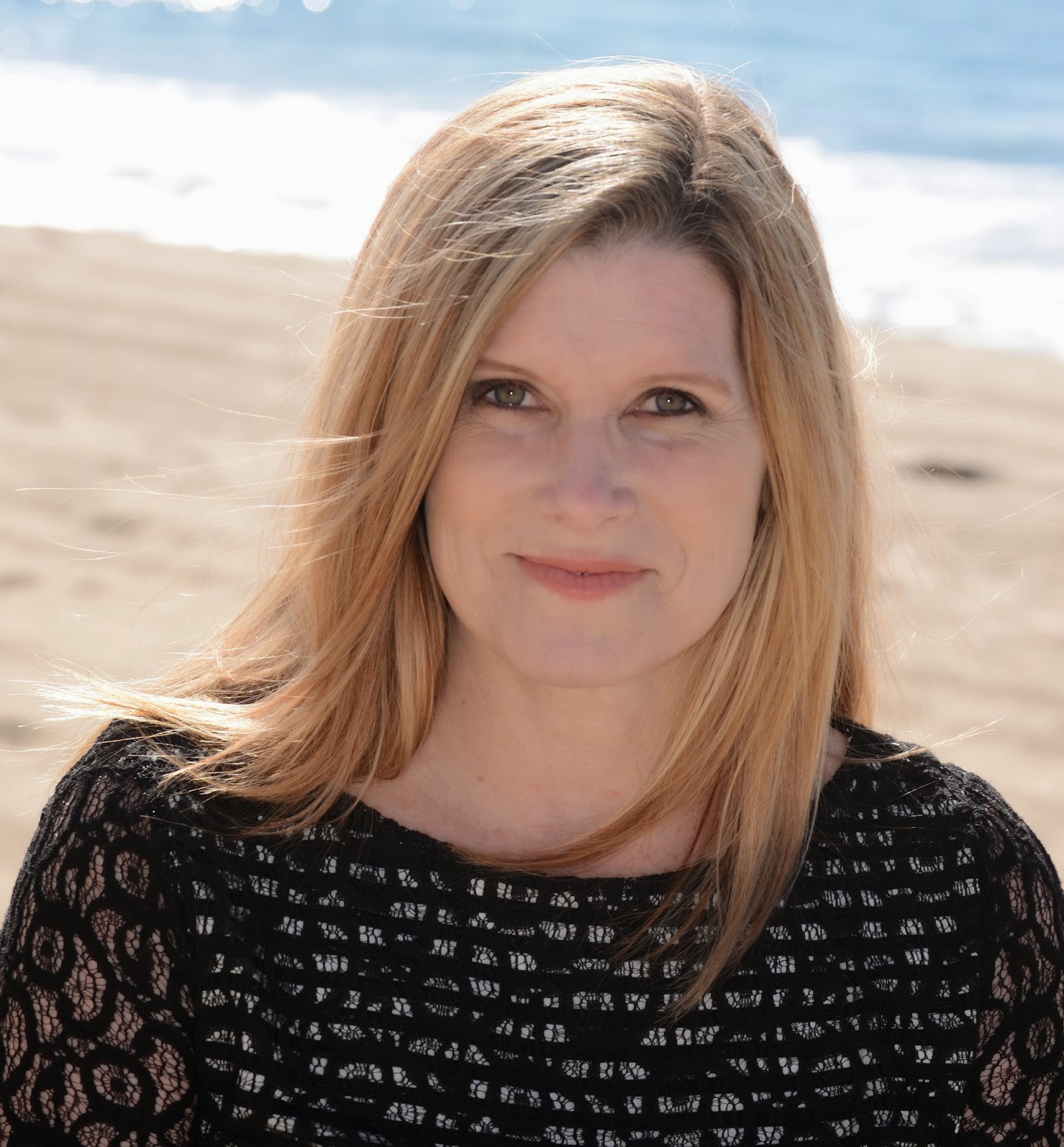
The author on Hayden and Stella's beach.
SP: What inspired you to include a deaf character in your novel?
DL: I had this dream of a story where the characters could listen without hearing and speak without words.  I wanted to tell a story about a girl who loses her hearing, and how becoming deaf challenges her to find herself. Stella begins the book very much focused on the way things sound. In fact, the first time she hears Hayden speak, she is disappointed because his voice isn’t beautiful to her ears. She changes into a much stronger and more complete person because she is deaf.   

SP: What research did you do to make your character believable?
DL: I began with research about head injuries and resulting sensorineural hearing loss. I read a lot of articles and interviewed a pediatrician and a pediatric nurse practitioner about my medical questions. Specialists from the House Ear Clinic answered specific questions from me about cochlear implants. I watched videos and read first-hand accounts from people having their implants programmed to understand what that experience would be like for Stella.

SP: What do you hope that readers will take away or learn from Silence?
DL: My greatest wish is that readers will find hope in the book. That they will relate to Stella and Hayden’s journeys to overcome obstacles in their lives and that this will inspire readers to seek their own voices.

SP: What advice do you have for young readers?
DL: Find your own voice in creativity. Paint, draw, take photographs, write stories or poems, dance, just express yourself. Your voice needs to be heard.
And keep reading!

SP: Anything you'd like to add...
DL: The most important lesson I have learned in becoming a writer is to never give up. If you believe in yourself and you keep going even when things seem impossible, you can accomplish anything.
Thank you, Sharon for bringing books to readers and for hosting me on your blog today.  
********************************************************************************
 For more information about the author including her fascinating background as an actor and singer (performing back up vocals for Belinda Carlisle and Frank Sinatra!) and her other books, visit: http://www.deborahlytton.com.
To purchase the book, click the link below.

Wednesday, November 12, 2008

Saturday, December 15, 2007

Inside Gallaudet--Author and Peace Corps volunteer Josh Swiller opens dialogue

While I already covered this presentation in an earlier post, this article includes student and faculty perspectives regarding the presentation as well as the roundtable discussion (which I did not attend) that you may find interesting. Josh mentioned to me that he was coming back to Gallaudet next year but I was not aware that his book had been selected as the summer reading text for the 2008 Honor's Program.
************************************************************************
(This was posted on Gallaudet's website December 13th. )
Inside Gallaudet: Author and Peace Corps volunteer Josh Swiller opens dialogue
*************************************************************************
Josh Swiller, a New York-based writer, teacher, and social worker, spent two years in Zambia as a Peace Corps volunteer among black mamba snakes, raging hippos, and murderous village elders. As an oral deaf person who had never felt a part of either the deaf or hearing world, Swiller found a place where hearing status was irrelevant--other needs were far too pressing.

Deaf since the age of 4, Swiller communicates mainly through speaking and lip-reading but learned sign language when he studied at Gallaudet in the early 1990s. When hearing aids stopped working for him, Swiller communicated mainly in sign language for two years before getting a cochlear implant. When Dr. Gina Oliva, a professor in the Department of Physical Education and Recreation, and graduate student Summer Crider met Swiller at the Annual Conference on Mainstreaming Students with Hearing Loss, which is sponsored by the Mainstream Center at Clarke School for the Deaf, they invited him to visit Gallaudet to share his Peace Corps experience and learn more about the University today. Swiller recently published a memoir of his experience, Unheard: A Memoir of Deafness and Africa, and has been traveling the country sharing his unique perspective.

Swiller’s November 27 visit to Gallaudet included a presentation of his adventures in the Peace Corps, a roundtable discussion on Gallaudet and the deaf community, and a film screening and discussion.

In his Peace Corps presentation, Swiller told a large group of students, faculty, and staff, that, in his experience, Africa was a place where deafness didn’t matter. He said he was attracted to the Peace Corps because he believed that he would find an intense experience--a place where deafness would have less significance--and he found it in a village in Zambia. “Africa was intense because the people there have so many real problems like poverty and death; deafness became a non-issue,” said Swiller.

This experience was a marked contrast to what he faced growing up. “My parents assumed I was slow before they found out I was deaf,” Swiller said. This was the beginning of a struggle with deafness that would last into adulthood.

Swiller explained that he spent his childhood reading as a means of connecting to the world around him and that he was constantly searching for meaning, trying to understand where he belonged. Deafness for Swiller was a feeling of in-between--being not quite here or there. “I thought I would find the answers at Yale University, but there, I felt lost and isolated,” said Swiller. He became a student at Yale before the Americans with Disabilities Act mandated accessibility. He didn’t know any other deaf people or even that he had any rights as a deaf person.

But in Zambia, deafness allowed Swiller to bond with the villagers; the survival skills he developed growing up deaf allowed him to adapt more easily than the hearing volunteers. His quick learning of the Bemba language he attributes to intense lip-reading, though he credits his ability to make fast friends to his copy of the swimsuit issue of Sports Illustrated.

Swiller also had two important pieces of advice for anyone in the audience with a yen to travel to Africa’s hinterlands: three pairs of underwear will last a person for two years, and never get between a hippo and the water.

The roundtable discussion, Swiller’s next activity, was planned by Crider and Oliva in consultation with several faculty members. It began by discussion of an idea posed by Michael Chorost, author of Rebuilt: My Journey Back to the Hearing World. During his recent visit to campus, Chorost said that Gallaudet has the potential for “teaching the nation how to form and sustain healthy communities.” Swiller has made strong statements about changes he feels the University should make as a community. The roundtable enabled him to engage in an intellectual and respectful discussion with Gallaudet faculty, staff, and students about various perspectives on the kind of change needed.

That evening, Honors students explored another side of Swiller. They were invited to bring a friend to the Honors Lounge to munch on pizza and watch the 1993 film Little Buddha. The movie lent itself easily to discussion with its theological themes and thought-provoking quotes like, "To learn is to change." Dr. Jane Hurst, professor and chair of the Department of Philosophy and Religion, led a discussion about some of the themes arising in the movie, notably the differences between Christianity and Buddhism and the central concepts of Buddhism (the Buddha, the Dharma, and the Sangha). Swiller shared his journey as someone from a Jewish background who eventually spent four years as a Zen monk.

In answer to students’ questions, Swiller and Hurst were able to add explanations of Buddhism in practice. One student asked, "What is the role of emotion in Buddhism? In Christianity you have Jesus expressing anger and throwing tables, but I don't associate anger as an emotion expressed in Buddhism."

Swiller explained the idea of recognizing emotions without holding onto to them, acknowledging and accepting them but also letting them pass on. A telling example of detachment from ego and emotion was Swiller’s story of his Buddhist teacher's reaction upon arriving home and finding his house burning down. After a moment of watching the disaster, the teacher turned to the people with him and asked, "Does anyone have any marshmallows?"

Dr. Hurst likened the teacher’s reaction to the one she saw at a protest attended by Buddhist monks. A heavy rain started as they marched, which would have dampened most spirits. The monks, however, chose to laugh as they walked on.

From the challenges Swiller experienced as he struggled to find a niche in the deaf and hearing worlds and developed his religious beliefs to the trials of life as a college student, the themes of Swiller’s visit were readily applicable in everyone’s lives.

Dr. Hurst noted that while Swiller’s cultural and religious choices may have been different from the students’, a productive dialogue emerged. “They had a respectful discussion and asked perceptive questions about what is a foreign religion to many of them,” she said.

This will not be the last time Swiller will serve as a catalyst for discussion. His memoir is one of the Honors Program’s 2008 summer reading selections and he has been invited to present to the campus and meet with Honors students next fall. Those involved in the visit felt that Swiller offers an important experience and perspective on deaf life, and are eager to invite continuing dialogue.

Wednesday, December 05, 2007

Josh Swiller Interview

The Unheard: A Memoir of Deafness and Africa
(September 2007) by Josh Swiller
Paperback: 288 pages
Publisher: Holt Paperbacks


Don't walk! Run to your local bookstore and buy this book. After having the book in my possession for weeks, I finally picked it up and read it within two days (I do have a job or I probably would have finished it within one). Josh Swiller is honest, witty, at times frightening, and most of all tells a great story. He's the kind of guy you want to sit down and have coffee with... and as I noted about his Gallaudet presentation, he does like coffee. The story is fast-paced and I am still out of breath. As a writer, he will pull you in to become part of this story. Can it really be a memoir? Wow! As a reader, there were times that I adored him and there were also times that I wanted to throw the book across the room because he really bothered me. Although I met him before reading the book, I still wasn't sure if he would survive his experience in Mununga. Sounds silly but you've got to read this book! It's a little travel narrative and a little Hemingway (without all the wives and the cats). I hope you love the book (and him) as much as I do.

Meeting Josh just wasn't enough! I had to have an interview about his book. Read my recent interview below.
************************************************************************
SPW: During your presentation at Gallaudet, you began by saying there are three significant meanings to the title but then you didn't elaborate. I understand because you hadn't received your coffee just yet. Would you mind explaining the title now?

JS: Ugh, I’m embarrassed. The three meanings are 1) unheard as in deafness; unheard words and cues, etc. 2) unheard lives. We hear all the time about "500,000 people in the Sudan are refugees" or "1 million people in the Congo are on the verge of starvation" and with such huge overwhelming numbers the sense that these are unique and fascinating individuals gets lost. They become numbers, instead of people. 3) unheard moments -- mainly that there are so many moments of peace and grace and beauty that pass us by because we're focused on our complaints and worries and oh-how-life-is-unfair. You would think that the people in Mununga would be more wrapped up in such a mindset than anyone, but in fact they were more open to the joy of the day-to-day than anyone I'd met.

SPW: Would you have changed anything about your experience? I'm assuming you would have given Jere your address right then, but would you have changed how you reacted to Maba stealing the pencils?

JS: Hey, no one's perfect. And I think it was important to show that about myself -- if I was going to portray everyone with all their flaws than I had to be fair and share my own. So, yes, I hopefully would react more appropriately to Maba's misbehaving, but I'm sure I'd screw up in other ways.

SPW: Administration said that they made a mistake by sending you to Mununga and wouldn't send future Peace Corps volunteers there. Do you believe that being sent to Mununga was the right place for your journey?

JS: Sure. Where we are now is the sum total of every moment in our life. To wish for one step to be different is to wish for a totally different creation...and this is our only life, our only trip. Regret is useless. It was exactly the right place.

SPW: Do you have any plans to go back to visit?

JS: Yes. Unfortunately the Hollywood writer's strike has put a crimp in some plans to make a documentary of a return visit; but I'm hopeful that I'll be able to get out there by April.

SPW: What advice would you give to young people (or the young at heart) who are reading your book?

JS: Live large. Live without fear; or better, figure out the things you are most afraid of and go right for them. Are you afraid of public speaking? Then that is because there is someone in you who has a lot to say and knows how worthwhile public speaking would be. Are you scared of talking to a certain someone? Then that is because that person means so much to you. Did something someone said hurt you? That is because you care about them so much. The things we fear most, we fear because we see so much of who we are and what we could be in them. All the more reason to go and conquer those fears.

Also, always, always, always, always have a sense of humor. As long as you can laugh at something you will be ok.

SPW: In the book and during your presentation, you state that "deafness" is irrelevant. In your story, when noise bothered you during, you turned off your hearing aids. Then, when you didn't have your hearing aids, you really missed sound. That doesn't seem like deafness is so irrelevant. At times, it seemed like a convenience. Would you mind elaborating on that?

JS: True, but I don't mean irrelevant in a practical sense. But irrelevant in the sense that in the long run, deaf or hearing makes no difference. They are really only .000001% of what makes us the spectacular beings we are.
************************************************************************
For more information about the book and the author, visit Josh Swiller's website.

Tuesday, December 04, 2007

Reading...Reading...Reading

I finished Josh Swiller's The Unheard this morning.... I'm still in shock. I have had the book sitting on my nightstand for weeks now. Deaf Character books end up trumping all other books.... but after his presentation at Gallaudet University, I devoured the book! I think it is one of the best I've read all year. Not one of the best with a deaf person or deaf character, but one of the best (period).

This morning I received Paul Rowe's The Silent Time. I'm already on the third chapter and I haven't even boarded the train.

The Silent Time by Paul Rowe (September 2007)
Paperback: 200 pages
Publisher: Killick Press

In the early 1930s, the small independent nation of Newfoundland is entering a silent time, about to submit to a form of dictatorship in order to resolve its straightened financial circumstances. As a result, Dulcie Merrigan, a young deaf girl living on a remote shore is being denied her right to an education. Neither she nor her mother, Leona, can successfully contend with the political and economic forces that so drastically affect their lives. After turning in vain to her friend and political representative, William Cantwell, Leona realizes that the time has come to unearth her tragic past. Specifically, a stolen shipment of valuable postage stamps, a remnant of the painful silent time that she herself endured, lies hidden in a nearby wood. Will they hold the key to Dulcies last chance for liberation and education?

Wednesday, November 28, 2007

From earthworms to Starbucks, Josh Swiller speaks to Gallaudet University

Just a quick note: Yes, Josh Swiller is a real life person, not a Deaf Character. I know that. With the picture below as proof, I didn't think he was a figment. But he is quite a character so this book is being included on this blog.
****************************************************************************
Josh Swiller made a fan out of me yesterday during his presentation “Deafness, Africa, and the Peace Corps”. After all, how can you not love a man who admits that he used to sleep through English class (but loved reading), ate fried earthworms in Africa (and said they tasted like popcorn), admitted that three pairs of underwear was all that was really needed during a two-year stay in the Peace Corps (frankly, he seemed more concerned about how many hearing aid batteries he would be bringing) and is full of sarcastic little comments and strange factoids (for instance, the former Zambian President Kaunda is an avid ballroom dancer and was a member of the audience for an episode on Dancing with the Stars)!

I’m not sure where to begin because I’m not sure he knew where to start. He sort of began by explaining the title of his book, The Unheard. He revealed that there are three significant meanings to the title but unfortunately he only told us one meaning after losing his train of thought. In his defense, his train (pun intended) arrived late and he showed up to the presentation just in the nick of time; there were some technology glitches that needed to be solved before his presentation could begin; and how could he begin his lecture without being promptly provided with a cup of coffee?!? Who can blame an un-caffeinated man for being a little distracted?

The “unheard”, he explained, refers to the cues that he, as a deaf person, missed. Not just “not hearing” but the missed conversations, the things that he as a deaf person just couldn’t catch or somehow missed. Josh (he seems casual enough for me to call him by his first name) explained that he never felt connected so he went to Yale in hopes of finding what he was missing. He didn’t find the illusive “it” at Yale. He said, “The more accomplished the professor, the worse their manners”. In a side note, I’d like to mention that I was the one who finally poured his coffee when no one else bothered to assist him. Following his logic, I must not be that accomplished. Nevertheless, he explained that he had professors who consistently would lecture with their backs to students while writing on chalk boards. This was not the best learning environment for an individual attempting to lipread.

After graduating from Yale, he went to Gallaudet hoping that once again and perhaps by being surrounded with other deaf people he would feel connected. Even after learning American Sign Language, he didn’t feel like he belonged. He explains, "To the hearing people, I was deaf; to the deaf people, I was hearing."

Josh said that he wanted to find a place so intense that deafness and belonging would be irrelevant... so he joined the Peace Corps. Because he communicates best in a one-on-one environment, the exact nature of the Peace Corps interview, his “deafness” never even came up. He was accepted, trained and then as part of a group of eight volunteers headed to Zambia. Josh shared that he was initially concerned about learning the language. After all, he was the only deaf guy, right. Yet, within the group of volunteers, Josh became the second-best language learner. And while some of the other volunteers just couldn’t make a connection with the villagers, Josh almost instantly made these connections. He believes that his “deafness was a benefit” because by being deaf he had learned to focus on people (for lipreading purposes); he had learned how to become an assertive communicator; and, because being deaf and having a younger brother and a cousin who are deaf, he “knew how to have a connection without words”.

While in Zambia, Josh learned how to run quickly (after all, he accidentally stepped on a black mamba, the second largest, venomous snake in the world); he learned how the villagers believed in witchcraft (when asked if he believed, he laughed and said “No” while simultaneously knocking on the wood table); and, he learned how to appreciate what is truly important in his life. During the rainy season, he said that approximately three people would die daily from diseases. Even Josh, who didn’t like to take his preventative pills, got Malaria and was told that for hours during his hallucinations he sang the dreidel song that he had learned in his childhood.

“Africans embraced each day with complete joy even though they got a raw deal”. This helped him put his own “raw deal” in perspective. He explained, “Having a sense of humor when things are at their worst is really important.” He joined the Peace Corps because they “get you outside of yourself”. When a student in the audience seemed hesitant about joining the Peace Corps because of all the differences, Josh said, “In Africa, you lose everything you know. It’s out the window!... that is a gift.” Now after the experience, he steps back during his day-to-day occurrences and asks himself, “How important is this?”

Another student who mentioned her concern about joining the Peace Corps was that when the volunteers came home they usually couldn’t find jobs. Josh smiled and said that three weeks after returning home he became a Zen Monk for a few years. When an audience member asked him to compare his feelings of his deafness before his Africa experience and about how he feels about his deafness now, he sipped his coffee and replied, “It’s an irrelevant word”. In Zen practice, he learned that what keeps us back is how we define ourselves. At the end of the day, we should drop the labels and ask, “Was I kind? Did I love well? Did I keep my heart open? Deafness is not that important… it’s how we’re open”.

The presentation was well-attended. Afterwards, I was able to chat with him for a few moments and secure a future interview with him. He signed with individuals in one-on-one situations but had explained when he began the presentation that for lectures he prefers to speak.

He was charming, witty, and because this blog is for a younger (and younger at heart) audience, I had to leave out the racy side comments (which only made me adore him more) because they just weren’t “PG”.

For more information about Josh Swiller or to buy his book, visit his website: http://joshswiller.com/

Monday, November 26, 2007

Joshua Swiller: Deafness, Africa, and the Peace Corps

Joshua Swiller, former Peace Corps volunteer and author of The Unheard: a memoir of Deafness and Africa will give a presentation tomorrow at Gallaudet University (12:20–1:20 p.m. in JSAC G-Area).


Swiller has openly shared his struggles with his identity as a deaf person, being raised with the oral method and having no connection with other deaf people except his brother and cousin. In his book, he describes that after graduating from Yale, he felt lost. He went to Gallaudet University hoping to find answers and learned sign language. He explains, "To the hearing people, I was deaf; to the deaf people, I was hearing." Continuing his search for himself, he joined the Peace Corps and worked in Africa.
I have already rescheduled meetings and appointments so that I am able to attend. I'll blog after the presentation.

I just added this YouTube video for those of you interested in Josh Swiller.


Saturday, November 03, 2007

Deaf Character Author and Real Life Mom creates blog 'An American Mom in Tuscany: a Cochlear Implant Story'

In August, I interviewed Jodi Cutler Del Dottore, author of RALLY CAPS (2007) a book based on her family's life and her son Jordan who is deaf and wears a cochlear implant. Since then, Jodi has been busy compiling information and resources for other parents like her. Last month, she started a blog An American Mom in Tuscany: a Cochlear Implant Story: Jordan's journey in deafness with a cochlear implant - Tuscan-American Style. She has over a dozen posts already that include personal information about her family and inspirational stories about other families who share similar experiences. With all that blogging and being a mom, my only concern is when will she find time to write another book!?! It's always about the books for me;)

Saturday, September 01, 2007

International Children's Books with Deaf and Hard of Hearing Characters

While searching the internet, I found these books mentioned on the van Asch Deaf Education Centre of New Zealand website (http://www.vanasch.school.nz/). While I was unable to find the books for purchase on the U.S. Amazon.com site, I did find them directly from the Thomson Learning Australia publishing website (http://www.thomsonlearning.com.au/).

SUPER-TUNED! by Heather Hammonds
Publisher: Nelson Thomson Learning, 2000, Reading Age: 3-4th grade

Super-tuned is a beginner chapter book/ picture book. The main character, Nick has a unilateral hearing loss and is fitted with "super-tuned" hearing aids which inable him to hear a police car-chase and a mayday call from a fishing boat. Nick enjoys his hearing aids because they help to save the fishermen.

Jason and the Blind Puppy by Dawn McMillan
Publisher: Nelson Australia, 2004
In this beginner ‘chapter’ book (3 chapters), main character, Jason, is deaf and wears hearing aids. Jason also uses (New Zealand???) sign language.

Missing! by Dawn McMillan,
Publisher: Nelson Australia, 2004
In a follow-up series,main character Jason is featured. Again this book includes some illustrated signs.

WHAT’S YOUR PROBLEM? by Geoff Thompson
Publisher:Thomson Learning Australia, 2003, Reading Level: 3-4th grade

What's Your Problem is an instructional reader that focuses on solving problems such as space, woodworking, recording music and hearing. In the section on hearing, the authors answer questions on hearing aids, cochlear implants and an early ear trumpet. Through charts and diagrams, they show how a cochlear implant works.

Monday, August 13, 2007

Interview with Jodi Cutler Del Dottore, author of RALLY CAPS (2007)

RALLY CAPS by Stephen J. Cutler and Jodi Cutler Del Dottore
Reading level: Ages 9-12
Paperback: 88 pages
Publisher: PublishAmerica (April 16, 2007)


I have often been told that I need to include more "boy" books and "sports-related" books in my reading repertoire. Guilty as charged! When the author of Rally Caps contacted me to review her book, I thought, "Perfect... a book with boy main characters, centered around baseball, and that includes a deaf character!" What I didn't realize is how much I didn't know about baseball.... and boys. Thankfully I'm married to a man who is a boy at heart and who is able to give me basic baseball terminology definitions and other "boy" vocabulary such as bugjuice. Nevertheless, I made it through the book in one sitting.

RALLY CAPS is the story of Jordan, a ten-year-old who gets injured while trying out for Little League. When the doctor places him on the “disabled list” (i.e. no physical activity for six to eight weeks), Jordan mopes around spending much of his time playing PlayStation and watching the Cartoon Network. When he finally goes off to baseball summer camp he has to overcome his anxiety of another baseball injury and swimming with the possibility of meeting the lake monster who steals swimming trunks.

Jordan shows off his extensive vocabulary (using words such as 'formidable' to describe a pitcher) when be meets and befriends Luca, a deaf character who wears a cochlear implant and Luca’s sister Niki (who is known at camp as Nick but no spoilers here!!!). Jordan learns a great deal from Luca’s ‘nothing is impossible’ attitude, and his hero Cal Ripken Jr. Luca also teaches readers a bit about his home in Italy including such delicacies as Nutella, a hazelnut chocolate spread.

RALLY CAPS was released just in time for Cal Ripken Jr.'s historical induction into the National Baseball Hall of Fame. Co-author Stephen Cutler traveled to Cooperstown for a book signing at Augurs Bookstore, next door to the National Baseball Hall of Fame Museum. The author was able to watch his hero, Cal Ripken Jr. being inducted into the Hall of Fame. Read my interview below with co-author Jodi Cutler Del Dottore (daughter of co-author Stephen Cutler) to learn about how they collaborated writing the book from the United States and Italy.


(Pictured Right: co-authors Jodi Cutler Del Dottore and Stephen Cutler. Jodi's son and RALLY CAPS inspiration, JORDAN in the middle at a book signing)


*****Interview with author Jodi Cutler Del Dottore-- Read below*******

SPW: From the back of the book and from your website, much of the book appears to be based on real events, not just fiction. I'm so curious if your father was actually like the character Jordan (a prankster at camp). AND while your son Jordan was your inspiration for the book, is he more like the character Jordan or the deaf character Luca?
JCDD: The book is a combination of real-life events and fiction. Yes, the character of Jordan is a mixture of what happened to my father (when he was 10) following a flying bat incident and the anxiety he experienced at camp that summer – and his idol Cal Ripken Jr. It also represents anxiety I went through after my son's cochlear implant surgery. Anxiety and panic attacks are becoming too common in children today, and I wanted these individuals to find support in a character able to overcome anxiety. The pranks were various jokes from my Dad’s camp experience and my own experience in day camp, living in a sorority house during college and April fool’s jokes my sister and I played on my mom and dad during our childhood. My dad added the camp setting (the actual camp he attended as a child for 12 summers) and traditional camp cheers. His baseball camp experience was an integral part in forming the person he is today, and believe it or not, he broke his nose and had surgery again during an Oriole game while diving for a foul ball hit by Eddie Murray! Niki and I were with him that time at Memorial Stadium. Quite a night that was!

My son JORDAN is more like the deaf character Luca but with some of the insecurities of Jordan. JORDAN is fearless, always has been, however has some of the insecurities that living with a disability brings, despite his significant progress made in overcoming language and social difficulties.

SPW: You've included several names of your family members in the book as characters. On your website I saw the picture of you with Niki. Is she a family member too?

JCDD: Niki is my sister and the character Nick represents not only the opportunity to depict a strong female character, but a window for the reader providing insight as to Luca's history and challenges he's faced in his oral approach to deafness. Like me, Niki is an athlete. There is no doubt she would have made that catch described in the book – she was that good!

SPW: Your family clearly has a passion for baseball. Can you explain what it was like to see your father after he met his hero for the first time?

JCDD: I'll let my dad answer this one! I will say that he has been my coach my entire life and has taught me everything I know about baseball. The history and drills and chats on the “CB Rock” were from my father’s vast knowledge of the game he loves. He attended 5 Fantasy Baseball Camps including two of Cal Ripken’s. He tells me that they all were unbelievable but the best memory is the 7 inning game he pitched and warming up with Cal on the sidelines. He met his other hero, Brooks Robinson, at the Oriole Fantasy Camp in 1996. Brooks labeled him “Mr. Scoop” because my father played first base and always scooped up the short throws from the infielders. My father will always have that “little boy” in him from his love of sports. Now he umpires softball down in Florida 4 nights a week. But what I got most out of my father’s love of the game was his role model, Cal Ripken and what he represented – playing through injury, criticism/media, and persevering through it all – and the importance Cal placed on family. Cal was the perfect inspiration for our book (along with the positive confident deaf child) of persevering through difficult times – the two represented a perfect compliment for our story.

SPW: Will you describe how your father and you collaborated on the book from two different countries?

JCDD: We began working on "the book" when he told me he was thinking of writing a short story for a baseball magazine based on his Travel Team Tryout accident and he wanted to incorporate Cal Ripken Jr. I told him that it could be the basis for a book if we incorporated his camp experience following his frightening flying bat incident and make it into a baseball camp story. He said go with that, so we began corresponding back and forth over a six year period. I added the character of Luca (based on my son). During this period, Jordan went from using hearing aids to our ultimate decision of cochlear implant surgery. The book took off after the results Jordan obtained from his cochlear implant. Whenever I lulled in writing, my father would add a piece and I would take it from there. It was a team effort! All correspondence was done by sending Word attachments to emails from Italy to Baltimore and then West Palm Beach where my father currently resides.

SPW: You've worked as an English teacher and a translator. Had you met any deaf children or adults prior to having a son who is deaf?

JCDD: I was 24 years old when Jordan was born. I had had no prior experience with working with deaf children nor had I ever even held a baby before him. I remember working at a fast food place in the mall when I was sixteen years old and a really good-looking guy my age walked up to the counter to order. He was wearing hearing aids. He said, "Hello" and placed his order. As soon as he left, my eyes started tearing up and I asked to take my break. I cried, sobbed for the entire thirty minute break, seeing that guy wearing hearing aids and talking majorly affected me and I could not understand why. I tried to take a sign language course each one of my four years of college and there was always a schedule conflict that prohibited me from taking the course.

SPW: Can you explain a bit about your family's decision for Jordan to get a cochlear implant?

JCDD: When my son was six months old, I showed his picture to a psychic and the first thing she said was, "Your son has music in his ears." This was the phrase I remembered most when I was given the news that my son was deaf and it helped me to perceive deafness in a different way. Jordan wore hearing aids for eight years and had speech therapy three times a week for every one of those years. When he was eight years old, he was doing well in school but he was suffering with his peers. In Tuscany we are famous for using bad words and while his peers were moving along in language even this type of language, he was falling further and further behind socially. I saw him suffering. I decided that if we had chosen the oral approach and the cochlear implant was an option- years earlier it hadn't been because he had quality gain from his hearing aids despite his profound deafness - then we should go ahead with the surgery to offer him every possibility to hear as well as possible. The cochlear implant would provide sound more similar to the way we hear as opposed to the hearing aids that were like "two bombs in his ears" as described by my audiologist. My husband and I made the decision together and three months after this decision, Jordan had his surgery in Pisa. The cochlear implant has changed our lives. My son's world literally opened before him, his emotions, his perspective on relationships, his schoolwork, and his self-esteem. He is proud of himself and is the first to describe the changes in him before and after the implant. A few months after the implant surgery, my father asked Jordan how much was his hearing had improved. Jordan responded “One-thousand percent.”

SPW: What advice would you give to young people who are reading your books for the first time?
JCDD: I would like every child reading this book to see themselves as I see my own son, as a strong, sensitive, extraordinary individual. We each have a quality or ability that makes us unique, whether it's in sports, art, music, dance, etc. Focus on what makes you special and you will find the strength with the support of the unconditional love family (Mom and Dad - as annoying as we may be) and your siblings (a sister in this case) - to persevere and overcome all difficulties and obstacles – and realize that nothing is impossible.

Baseball imitates life and life imitates baseball. In either case you go through a roll-a coaster of highs and lows, trials and tribulations, celebrations and setbacks, but with patience we get another chance to show our true colors – to overcome obstacles or difficult times. Hopefully, RALLY CAPS sends that message. And what better than a “Rally Cap” to be waved and to represent that little extra mojo late in the game to help spur your team to a come-from-behind victory.

SPW: Do you have plans for writing another book with these characters?

JCDD: The RALLY CAPS sequel is in the works, what my son doesn't know is that he will be writing a Note to the Reader! Hopefully, this one won't take another six years to write!

******************************************************************************
For more information about the book and to read an article written about Jordan in Volta Voices, visit http://www.rallycaps.net/