Thursday, January 31, 2008

New 'Deaf Character' Thriller for ages 9-12 by Australian author Christine Harris

Mask of the Jackal (2008) by Christine Harris
Reading Level: 9-12 years old
150 pages
ISBN 978-0-646-48531-7

Book Description
Morgan Steele is fascinated by Ancient Egypt and mummies. Until he is alone in a museum basement and strange things begin to happen.
'There are three mummified bodies down here. I know they're thousands of years old and can't hurt me. Yet pictures flash into my mind of skin torn from faces, of gaping holes where mouths should be. I begin to sweat.'
What starts as a school assignment ends with Morgan involved in the disappearance of a mummy, kidnapping, madness, a terrifying attempt to escape danger and a search for immortality.

Author Christine Harris' Mask of the Jackal features a deaf girl named Jordy. Harris, who lives in South Australia, learned Australian Sign Language for a year and that inspired her to include a deaf character.

I can't wait to read this book! In the meantime, check out an excerpt on the author's website.

Wednesday, January 30, 2008

Read Captions Across America (March 3, 2008)

March 3, 2008 — Read Captions Across America™ for Read Across America Day

Read Captions Across America™ is a national reading event with an emphasis on the importance of captioned media as a reading tool for children whether they are deaf, hard of hearing, or hearing. Events and activities will take place nationwide on Read Across America Day (March 3, 2008) and throughout the week before and after this special day.

This is the third year Described and Captioned Media Program (DCMP) is partnering with the National Education Association (NEA) to celebrate Read Across America, observed in conjunction with the birthday of beloved children's author Dr. Seuss.

For more information, click -> Read Captions Across America™

Tuesday, January 29, 2008

News Award for Through Deaf Eyes

Through Deaf Eyes makers accept Alfred I. duPont-Columbia University News Award
(click to read the full story on Gallaudet's website)

The creators of the PBS documentary Through Deaf Eyes accepted a silver baton as an award for the Alfred I. duPont-Columbia University 2008 News Award.

The award ceremony was held at Columbia University in New York City.

Saturday, January 26, 2008

Children's Books: To Be Published in 2008

Enrique Speaks with His Hands (June 1, 2008) by Benjamin Fudge
Reading level: Ages 4-8
Publisher: Hilton Healthy Kids; Ill edition
Language: English

Book Description
Enrique is special, but his family does not understand why until a stranger introduces them to other children who are just like Enrique. Only then does the family realize that Enrique is Deaf. Enrique Speaks With His Hands is a beautifully illustrated book that can help parents teach children how to be tolerable of children who are different.

She Touched the World: Laura Bridgman, Deaf-Blind Pioneer (February 18, 2008) by Sally Hobart Alexander & Robert Alexander
Reading level: Ages 9-12
Hardcover: 96 pages
Publisher: Clarion Books
ISBN-10: 0618852999

Book Description
When she was just two years old, Laura Bridgman lost her sight, her hearing, and most of her senses of smell and taste. At the time, no one believed a child with such severe disabilities could be taught to communicate, much less lead a full and productive life. But then a progressive doctor, who had just opened the country's first school for the blind in Boston, took her in. Laura learned to communicate, read, and write—and eventually even to teach. By the age of 12, she was world famous.

Deaf Character in Book Series

A Touch of Grace (Daughters of Blessing #3) by Lauraine Snelling
Paperback: 320 pages
Publisher: Bethany House Publishers (March 1, 2008)
ISBN-10: 0764228110

Grace (Deaf Character) has appeared in Snelling's Red River Series, the Return to Red River, and now plays a more significant role in the The Daughters of Blessing series. A Touch of Grace is the third book in the series proceeded by A Promise for Ellie-book 1 and Sophie's Dilemma-book 2.

I'm looking forward to reading this book. The setting is the early 1900s. Mrs. Knutson has started The Blessing School for the Deaf in Blessing, North Dakota and now that Grace is eighteen years old she will start teaching with her mother. The characters throughout the book use sign language to communicate. While this book is considered a historical fiction romance, many of the characters are adolescents and young adults... and it is considered a Christian Romance so there shouldn't be any inappropriate material... but I'll give you more details once I've read it.

Book Description
She thought she knew what she wanted in life... then Jonathan arrived.
Eighteen-year-old Grace Knutson loves Blessing, North Dakota, and sees no reason to leave. She's more serious-minded than her twin sister, Sophie, and very sensitive to the feelings of others. In spite of her family's disapproval, Grace has always had a soft spot in her heart for Toby Valders, for she's seen the vulnerable side he keeps well hidden.

Jonathan Gould, the handsome scion of a wealthy New York family, creates a flurry of anticipation and speculation when he arrives in Blessing. Jonathan's father wants him to learn the value of manual labor and to appreciate the accomplishments of those not born to wealth. Surprisingly, the "city boy" takes to farm life and actually enjoys working from dawn to dusk alongside the others. Soon he finds himself inexplicably drawn to gentle, courageous Grace.

But Jonathan's affection presents an agonizing dilemma for Grace. Is he truly the one her heart desires?

Tuesday, January 22, 2008

Saturday, January 19, 2008

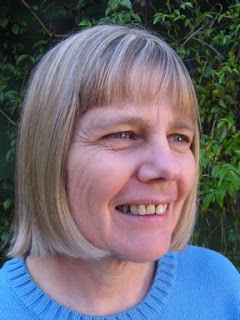
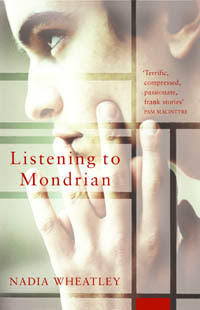
Interview with Nadia Wheatley, author of Listening to Mondrian

Nadia Wheatley was born in Sydney and began writing fiction in 1976, after completing postgraduate work in Australian history. Her published work includes picture books, adolescent and young adult literature, and short stories.

In her recent publication, Listening to Mondrian (December 2007), she created a collection of short stories focusing on adolescents and their diverse family relationships focusing on how the characters analyze who they are and how they fit into their families, their communities, and the world. One short story includes a CODA (child of Deaf Adults) who has signed up for a talent competition in the town's music festival. The character opens with the song "Alien" (the title of the short story). The ten-page story includes the teenager's worries about performing and the support from Deaf parents who volunteer at the festival and use sign language to communicate.


***Read my interview with author Nadia Wheatley below*******

SPW: How did you decide to include an adolescent from a deaf family who uses sign language in your story?

NW: I think I'll just tell you how the story came about. The idea for nearly all my fiction comes from place. That is, unlike some authors who start with plot, and others who start with character, I tend to think about a place, and then a story may or may not happen in it.
The place of this story is based on the small town of Apollo Bay, where I used to live. Music is big at the school there, and Apollo Bay hosts an annual music festival. It is a pretty easy-going town, in which alternative lifestylers (and city drop-outs or sea-changers) exist alongside traditional farming and fishing families.

As to how the character came about, I guess I found myself thinking about being a misfit. I always was one when I was young and, at the age of nearly 60, I still feel as if I don't fit into most groups. It rarely bothers me, these days, but it sometimes used to when I was growing up.
Of course, when we move to a new place, many of us ago through an experience of feeling like an outsider, whatever our character or personality is like. This kind of de-stabilisation can be a good thing: it can open the way for new insights and understandings, both of ourselves and of other people.

As a kind of foil or balance to my misfit adolescent character I wanted her or him to have really well-adjusted parents. I wanted these parents to be the kind of people who find it easy to fit in and make new friends, even when moving to a new town. As opposed to the adolescent who is a loner, I wanted the parents to be 'clubbable' people. Well, though I wanted the parents to aggravate their loner-child, I didn't want them to be smug and sickening.

SPW: Do you know any deaf people or have you learned American Sign Language?

NW: I found myself thinking of a couple who lived in another small town where I had once lived. They were the parents of friends of my step-children, and they were both deaf. I didn't know them, though I used to wave at them if I saw them in the park.

SPW: What do you hope that readers will learn or take away from the book?

NW: I don't want to say what I would like readers to take away from the story, because if the story doesn't convey this by itself, it has failed.

SPW: What advice would you give to young people who are reading your books for the first time?

NW: As to general advice: I am sure that reading stories and books is a way for us to enter the experience of people who are different from us — whether that difference is just a different gender; whether it is something like deafness or blindness; whether it is the fact that the character lives in Japan or on Mars; or whether it is just that the character has a different sort of personality. I believe that we cannot get this sort of transformational experience by watching TV or surfing the net or even by talking to people in real life. That is not to say that these activities are not worthwhile. But reading is different.
*************************************************************************
For more information about Nadia Wheatley, click here. To purchase the book,

Monday, January 14, 2008

Interview with Dandi Daley Mackall, author of Love Rules

Love Rules (2005) by Dandi Daley Mackall
Paperback: 242 pages
Publisher: Tyndale House
Reading level: Teen
(author pictured with her horses)

Siblings Jake and Emma (Deaf Character) have been friends with Mattie as long as they all can remember. With Jake and Mattie heading off to college, Emma makes them promise not just to write but to share their wisdom about love in the form of "love rules". Readers find out all about Jake and Mattie's "love" lives through their Monday get together where they fill out Emma's postcards. I was able to reminisce about my own early years of college while reading about what Mattie and Jake's encounters with new friends, college professors, and roommates.
Emma, who was diagnosed with lupus, is described as "thin and frail"; however, I just adored her for having such a strong sense of self, a strong connection with God, and an incredible amount of confidence for being a rising senior in high school. Emma wants to be a writer when she grows up and this is the reason she asks her brother and best friend to send her "research" about love. Emma uses sign language to communicate. Jake and Mattie are fluent in sign language and often interpret for Emma in various situations.
The best part about the book is the on-going friendship the characters have shared since childhood. Having a best friend whom I met in fifth grade, I can totally relate to the connection between Emma and Mattie. While Mattie's home life isn't as charming as Jake and Emma's (to say the least), Mattie makes her home with these friends who are much more like family than anything.

Dandi Daley Mackall has been a professional writer for over 20 years and has written and published around 400 books for children, adolescents and adults. I recently had to opportunity to speak with her about her book, Love Rules. Read my interview with her below.
*********************************************************************
SPW: How did you decide to include a deaf character who uses sign language in your book?

DDM: I think Emma, my deaf character, came to mind because I’ve known a number of very strong deaf or partially-hearing women, including our daughter. I’ve seen the special connections people can make through sign. I wanted to show that friendship in Emma and Mattie.

SPW: Do you know any deaf people or have you learned American Sign Language?

DDM: Our daughter Katy lost 40% of her hearing overnight when she was 3, as a result of Alport’s Syndrome. Since then, she’s lost a good deal more, and we’ve always known that she’s expected to go completely deaf, probably without much warning. Our whole family began learning American Sign Language as soon as Katy was diagnosed. Katy wears hearing aids, so we don’t sign as much as we should. Periodically, we take a class or refresher workshop, but we’re all pretty rusty.

SPW: What type of research did you do for the book to make your characters realistic?

DDM: The characters are based so much on people I know that I didn’t have to do a lot of outside research. Emma is a lot like our Katy, except Emma has no other special needs. Katy does. Mattie has a lot of me in her, I admit.

SPW: What do you hope that readers will learn or take away from the book?

DDM: Hopefully, many things for many readers. I do believe Emma comes across very well. I love writing about characters with uniquenesses that many people don’t understand. My books aren’t about those uniquenesses, but merely show strong characters who happen to have what others would consider difficulties, but what often prove to be assets. I also like it when readers come away from my books with greater hope and greater faith.

SPW: What advice would you give to young people who are reading your books for the first time?

DDM: Please just go with it. Let the story take you on a ride. Sink into the characters and see the world through the eyes, heart, mind, and skin of another person. I think that’s why we read. Where else do we get to take a ride in someone else’s head?

SPW: Anything you would like to add?

DDM: I’d love to hear from any of your readers. Please check out my website at http://www.dandibooks.com/. I’ve written an awfully lot of books for every age. Maybe there’s another one you might enjoy.
*******************************************************************
To purchase the book,
Also, visit the Love Rules website for e-cards, an overview of the book, and more information about books you may be interested in reading.

Sunday, January 13, 2008

Interview with Paul Rowe, author of The Silent Time

The Silent Time by Paul Rowe (September 2007)
Publisher: Killick Press

I'm been going on and on about this book for about a month now. See my December posts for a brief summary and links to articles about the author. I'm thrilled to have had the opportunity to discuss this book with the author. Based on his mother's experiences, The Silent Time has a strong sense of place in Newfoundland and a compelling plot that reads much like a play (not surprisingly since Rowe is both an actor and playwright). I was emotionally invested in each of the characters. With that being said, it is hard to believe that this is the author’s debut novel. Read my interview with Paul Rowe below.
******************************************************************************
SPW: In Memorial's Student Newspaper, I read an interview where you explained that you actually found letters about your mother's enrollment at the Halifax School for the Deaf. Can you explain how this developed into a novel?

PR: The letters are where it all began. They are dated in the early months of 1926 and formed the entire basis for my research. I had to track down who the signatories were, their social and political circumstances, and, in doing so, I encountered many of the stories, characters and events that form the novel.

SPW: You've included so many details about Newfoundland, the history of the education of Deaf people, and some personal histories of your mother and perhaps some teachers she had. I'm sure your mother had some input in your choices that you made about the book. Will you describe your research for the novel?

PR: My mother was helpful in describing her life at the School for the Deaf, and in the small coastal community where she grew up. I went to the Public Archives of Nova Scotia and found a number of pictures and old records that sparked memories for her. I would encourage her to reminisce about these things and got some nice detail that way. For example, she told me that she used home signs before she went to Halifax, (like a finger stroke down her forehead for the family horse) and she described an incident at school where a teacher had been unkind to her. It also found its way into the book. Since one of my main characters was a politician, it was important to get the politics of the era right, as well. That required quite a bit of reading. The other big element of research was, of course, Newfoundland stamps. All the stamp stories in the novel are based on actual, sometimes slightly altered, historical events. I recently did a talk on my book for the St. John’s Philatelic Society and I’m glad to say the accuracy of my research passed muster even among the experts.


SPW: I read that the cover of the novel has a black-and-white photograph of your mother while she attended the Halifax School for the Deaf. Were you able to give feedback or suggestions about the book cover?

PR: I collaborated to some degree with the designer, Sarah Hansen. I offered some feedback on draft versions, and provided the two images on the cover; the stamp and Mom’s picture. All the other design elements are Sarah’s. I think she did a really good job.


SPW: The novel revolves about the character Dulcie but the story isn't told fully from her point of view (which would be difficult considering the story began even before her birth). Can you explain your inspirations for some of the other characters such as Leona, Paddy, and William Cantwell. Were there real or historical figures who inspired you to include these characters?

PR: William Cantwell is roughly based on William Walsh, who was the Member of the House of Assembly for the district at that time and the signatory to one of the letters I mentioned earlier. Leona and Paddy are more fictional creations, although the tragic episode in Part One of the novel is largely derived from an old Cape Shore story about a couple who shared the same fate. Sir John Crawford, the Finance Minister, is roughly based on a historical figure who most people in Newfoundland recognize pretty readily.

SPW: You clearly researched the history of deaf people and deaf education; however, while you incorporated historical references such as the Braidwood Institute and the Abbé de L'Epeé, why did the teacher Claire Batstone (one of my favorite characters in the book) refer to "Gaudillet College in Boston" instead of the actual Gallaudet College in Washington, D.C.?

PR: To tell you the truth, I don’t know how that happened, but it will be corrected in the next printing. I’m really glad you liked Claire, by the way.

SPW: What advice would you give to young people who are reading your books for the first time?

PR: I would invite them to be willing to enter the world of a different place and time. Both my heroines, Leona and Dulcie are quite young when we first meet them. Young people might find it interesting to put themselves in my characters’ shoes, and think about their own possible reactions to the circumstances in the novel.

Among other things, this novel brings to light an issue of fundamental rights for deaf students, and for children everywhere who have the human right to an education. One of the reasons the novel is called The Silent Time is that Newfoundland’s deaf children were denied an education in the early 1930s, a time when no one was willing to speak up on their behalf. A number of children referred to in the novel never got the chance to return to school. My mother was one of those children, and I’m proud to have brought her story to light after all these years.
*****************************************************************************

Sunday, January 06, 2008

Deaf-Themed Literary Contest

NTID/RIT is seeking literary works about the Deaf experience. Top winners and honorable mentions will have their works published in a NTID/RIT Literary Works website. DEADLINE: March 1, 2008
For details, visit http://www.rit.edu/litcontest/